
Telling stories on the Aral Sea region and its future to inspire bioregional practice and reimagine the relationship between People and Land in Scarcity.

Zebra mussel, the returning aquatic ecology of the North Aral Sea.

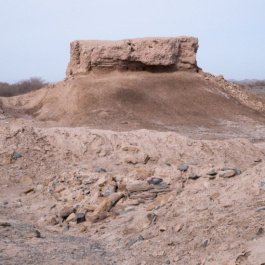
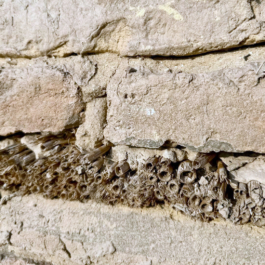
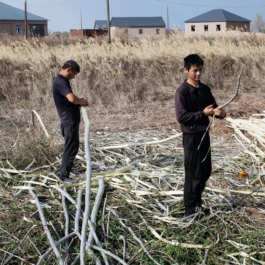
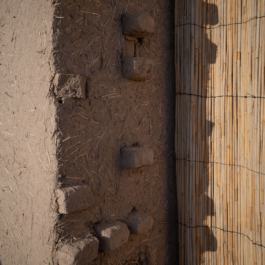

Clay in Karakalpakstan was shaped long before it became architecture. For centuries, the seasonal flooding of the Amu Darya carried silt across the delta, forming a landscape of mud, reeds and shifting ground. From this terrain emerged a material culture deeply tied to movement, climate and survival.
Earth, straw and reed were not simply available resources, but materials understood through generations of lived experience—cooling homes during extreme summers, insulating against severe winters, and adapting to the unstable conditions of the Aral Sea region.
Today, as concrete construction replaces vernacular building practices, clay is often dismissed as a material associated with rurality and poverty, a perception shaped by Soviet industrialisation, which introduced standardised cement housing and displaced local construction traditions. Yet clay architecture is regaining relevance for the qualities industrial materials struggle to provide in arid climates.
Returning to clay not as a material rendered inferior by modern development narratives, but as a living medium carrying bioclimatic adaptation, craft, and cultural memory.


When we speak about water in the Aral Sea region, we are not speaking about H₂O in isolation. We are speaking about water as it moves through soils, communities, and material cultures, carrying memory, shaping livelihoods, and giving rise to clay. The mapping is therefore relational, asking not what is water? but what is water in relationship with?
A polluted delta reveals industrial practices and policy failures, while the same water tells stories of resilience, traditional knowledge, and regeneration. The Aral interrelations mapping visualises these relationships, exposing how distant decisions reshaped both water systems and the clay-based building traditions that depended on them.
Together, the interviews and interrelations mapping provide a foundation for co-creation. This research-by-design process frames design as problem-setting rather than problem-solving. Although the research begins with water, it inevitably leads to clay, because the two cannot be understood in isolation.

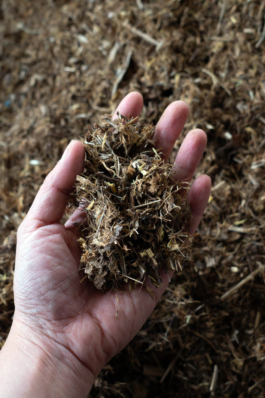
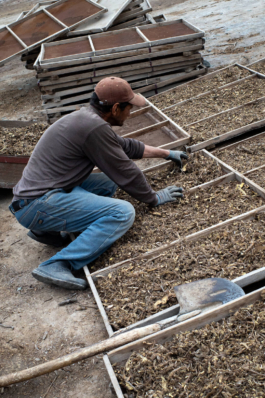
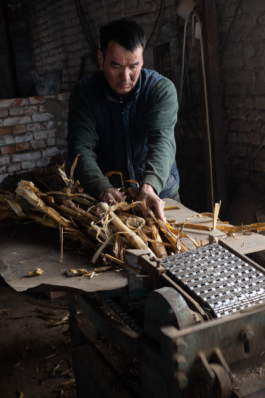
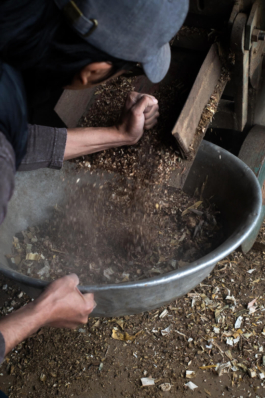

Brick experimentation with agro-waste and clay.
Mud brick architecture in Karakalpakstan developed from the use of loess clay deposits of the Amu Darya delta. For centuries, this fine silty earth formed the basis of rammed earth walls, mud bricks, mortars, and plasters shaped through collective labour and locally available materials.
As the Aral Sea basin continues to dry, the material conditions that once sustained earthen construction are rapidly changing. Rising salinity and soil degradation increasingly affect the quality of clay, while concrete and fired brick increasingly replace vernacular systems with energy-intensive construction reliant on extraction and transport.
We explored regenerative approaches to construction by reusing degraded earth and industrial and agricultural waste as building material. Developed through collaboration with Material Lab at Karakalpak State University, the research tests sun-dried bricks made from degraded clay mixed with agricultural by-products. Rather than extracting new resources, the project investigates how waste streams can be redirected into local construction, adapting vernacular earthen techniques to changing environmental conditions.
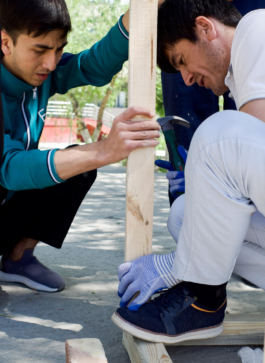
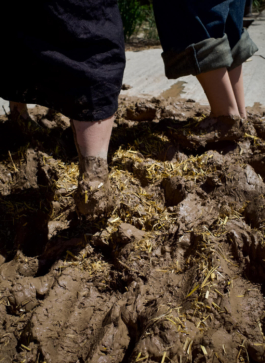
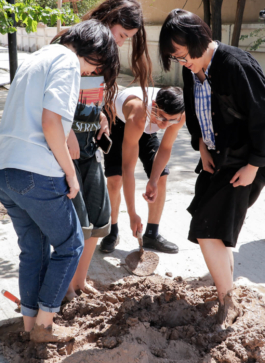
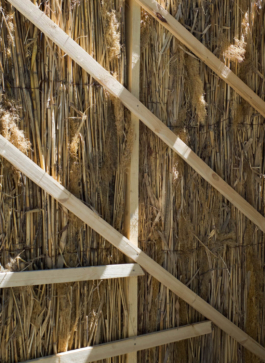
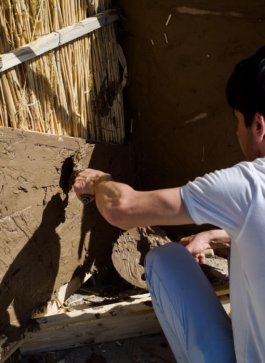
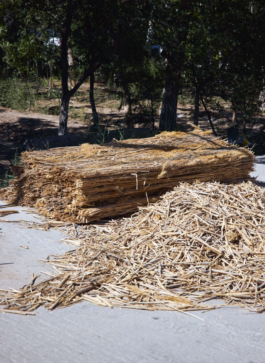
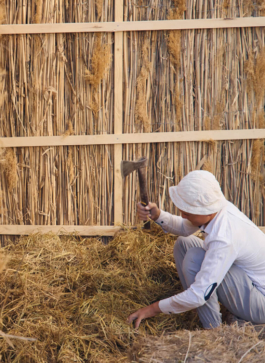
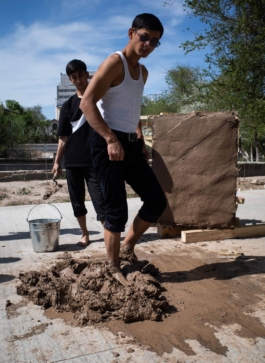
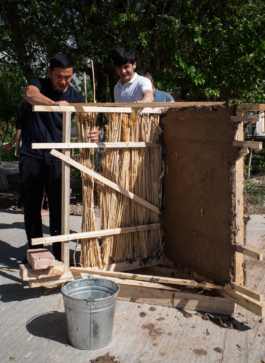

Impressions from the construction workshop with students from the Karakalpak State University.
Built from timber, reeds, clay, and straw, the shopker jay (plant-based house) is a traditional Karakalpak framed dwelling developed in response to the environmental conditions of the Aral Sea region.
Unlike monolithic mud houses, the shopker uses a lightweight timber frame filled with dense reed bundles, creating walls that are both insulating and resilient to moisture, salinity, and unstable ground. As the Aral Sea crisis intensified, many communities turned to this construction system, while the drying delta simultaneously reduced access to the reeds, timber, and workable clay that made it possible.
Today, much of the knowledge surrounding shopker construction survives only with older craftspeople. Recognising its value, we collaborated with craftspeople, young architects, and local builders to formalise and pass on this construction method. Combined with sun-dried bricks made from low-quality clay and agricultural waste, it serves as a testing ground and platform for exchange, demonstrating regenerative approaches to building through collaborative making.
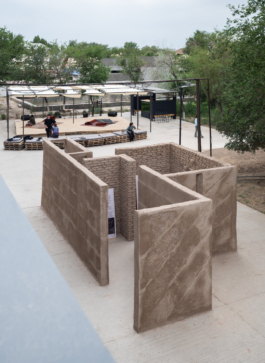
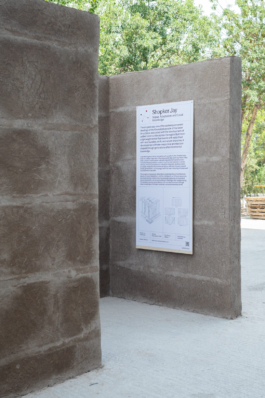
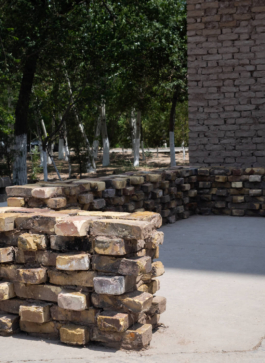
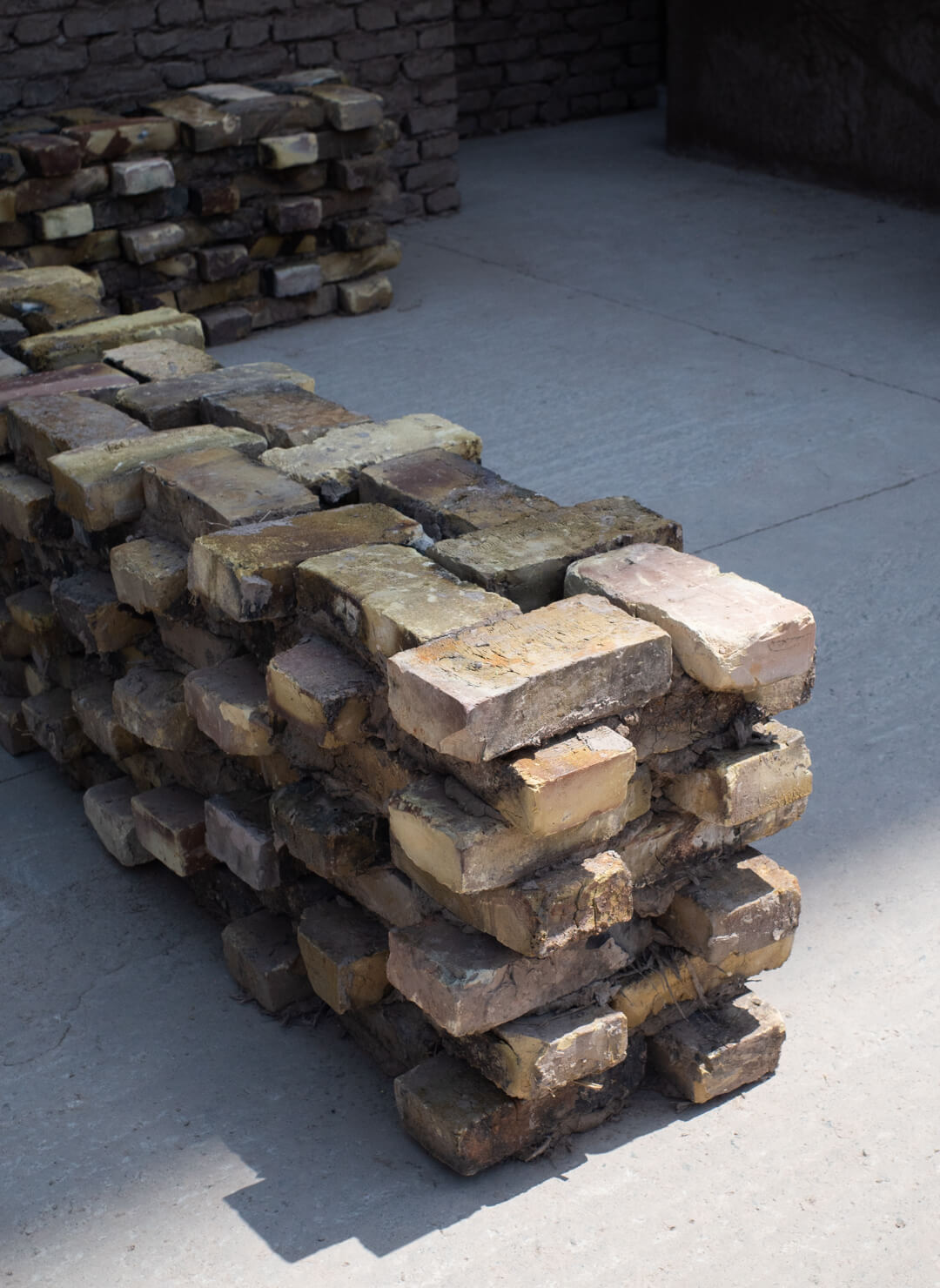
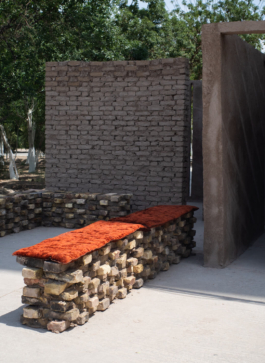
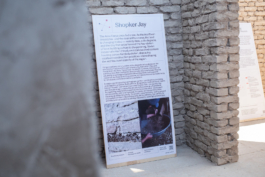
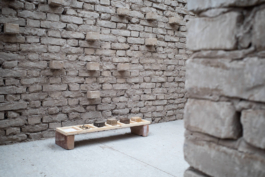
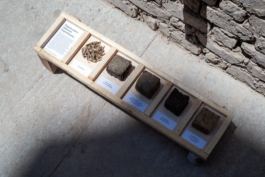
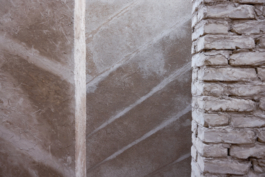
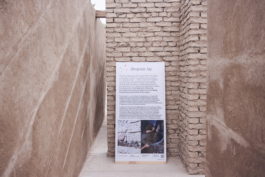
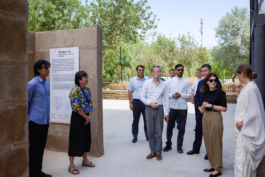
Impressions from the completed Shopker Jay Pavilion, serving as demonstrator to the public during “Aralasiw: Festival of Ideas for Aral School”.
As a result, the Shopker Jay Pavilion was conceived as a demonstrator, bringing a traditional Karakalpak construction system into the public realm. Rather than presenting vernacular architecture as an artefact, it positions the shopker as a contemporary building system with the potential to address current environmental and economic challenges. Constructed from locally available, bio-based materials, the pavilion explores how low-impact construction can reduce carbon emissions, shorten supply chains, and build upon regional knowledge and resources. As both prototype and conversation piece, it invites architects, policymakers, and local communities to reconsider the long-term value of regenerative building practices and the role of traditional materials in a low-carbon future.


Panel: “From Waste to Construction Materials” with invited guests from the Waste Management Agency, Brick Factory Entrepreneur and Head of Material Lab of Karakalpakstan State University. Format by Evey Kwong and moderation by Akhmed Kaipbergenov.
Speculative workshop: How do we reimagine future cities? Format and moderation by Maxim Velli and Kamila Sobirova.
Shopker Jay responds not only through design, but through activation. The project reanimates the shopker earthen building tradition through the intersection of material science, ecology, and living craft practice. It also serves as a platform for connecting disciplines, institutions, and situated knowledge, bringing together craftspeople, students, material scientists, and researchers from Karakalpak State University throughout the process—from material research and prototyping to collective construction.
Alongside the pavilion, workshops and a public panel created space to reflect on how we might build differently in the face of industrialisation, globalisation, and ecological change. Grounded in vernacular architectures from different contexts, the discussion explored how building traditions evolved in response to climate, available materials, and place, and what is lost when these relationships are displaced. Bringing together practitioners, researchers, and policymakers, it positioned regenerative construction not as a return to the past, but as a foundation for more resilient, locally rooted building cultures.
Image credit:
01 – Construction of an adobe house. First tier. Uzbekistan, 1914. 28670170, Zakhar Vinogradov, State Historical Museum
02 – Жданко Т.А. Каракалпаки Хорезмского оазиса (Материалы полевых исследований Каракалпакского этнографического отряда Хорезмской экспедиции АН СССР 1945-1948 гг.) // Труды Хорезмской археолого-этнографической экспедиции. Т. I. М., 1952bio
A project collaboration with the Material Lab of Karakalpak State University, Panaev Brick Factory and the Nukus Waste Management Agency. Supported by Uzbekistan Art and Culture Development Foundation (ACDF).
Project lead and designer: Evey Kwong
Architect: Akhmed Kaipbergenov
Brick experimentation concept: Maxim Velli & Evey Kwong
Master craftsman: Kydyrniyazov Kairatdin Eshniyazovich
Climate policy & sustainable development: Kamila Sobirova
Mentors: Jan Boelen & Eva Pfannes
Acknowledgement for brick experimentation:
Zhuginisova Nauryzgul, Zharlkaganov Sultan, Ayapbergenov Nursultan, Khalmuratova Oygul, Kalbaev Bakhauatdin, Nauryzbaev Azamat
Telling stories on the Aral Sea region and its future to inspire bioregional practice and reimagine the relationship between People and Land in Scarcity.
Zebra mussel, the returning aquatic ecology of the North Aral Sea.
Clay in Karakalpakstan was shaped long before it became architecture. For centuries, the seasonal flooding of the Amu Darya carried silt across the delta, forming a landscape of mud, reeds and shifting ground. From this terrain emerged a material culture deeply tied to movement, climate and survival.
Earth, straw and reed were not simply available resources, but materials understood through generations of lived experience—cooling homes during extreme summers, insulating against severe winters, and adapting to the unstable conditions of the Aral Sea region.
Today, as concrete construction replaces vernacular building practices, clay is often dismissed as a material associated with rurality and poverty, a perception shaped by Soviet industrialisation, which introduced standardised cement housing and displaced local construction traditions. Yet clay architecture is regaining relevance for the qualities industrial materials struggle to provide in arid climates.
Returning to clay not as a material rendered inferior by modern development narratives, but as a living medium carrying bioclimatic adaptation, craft, and cultural memory.

When we speak about water in the Aral Sea region, we are not speaking about H₂O in isolation. We are speaking about water as it moves through soils, communities, and material cultures, carrying memory, shaping livelihoods, and giving rise to clay. The mapping is therefore relational, asking not what is water? but what is water in relationship with?
A polluted delta reveals industrial practices and policy failures, while the same water tells stories of resilience, traditional knowledge, and regeneration. The Aral interrelations mapping visualises these relationships, exposing how distant decisions reshaped both water systems and the clay-based building traditions that depended on them.
Together, the interviews and interrelations mapping provide a foundation for co-creation. This research-by-design process frames design as problem-setting rather than problem-solving. Although the research begins with water, it inevitably leads to clay, because the two cannot be understood in isolation.
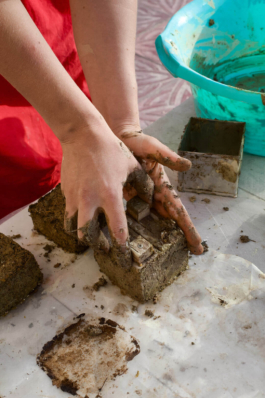
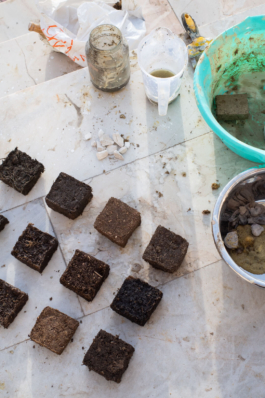
Brick experimentation with agro-waste and clay.
Mud brick architecture in Karakalpakstan developed from the use of loess clay deposits of the Amu Darya delta. For centuries, this fine silty earth formed the basis of rammed earth walls, mud bricks, mortars, and plasters shaped through collective labour and locally available materials.
As the Aral Sea basin continues to dry, the material conditions that once sustained earthen construction are rapidly changing. Rising salinity and soil degradation increasingly affect the quality of clay, while concrete and fired brick increasingly replace vernacular systems with energy-intensive construction reliant on extraction and transport.
We explored regenerative approaches to construction by reusing degraded earth and industrial and agricultural waste as building material. Developed through collaboration with Material Lab at Karakalpak State University, the research tests sun-dried bricks made from degraded clay mixed with agricultural by-products. Rather than extracting new resources, the project investigates how waste streams can be redirected into local construction, adapting vernacular earthen techniques to changing environmental conditions.
Impressions from the construction workshop with students from the Karakalpak State University.
Built from timber, reeds, clay, and straw, the shopker jay (plant-based house) is a traditional Karakalpak framed dwelling developed in response to the environmental conditions of the Aral Sea region.
Unlike monolithic mud houses, the shopker uses a lightweight timber frame filled with dense reed bundles, creating walls that are both insulating and resilient to moisture, salinity, and unstable ground. As the Aral Sea crisis intensified, many communities turned to this construction system, while the drying delta simultaneously reduced access to the reeds, timber, and workable clay that made it possible.
Today, much of the knowledge surrounding shopker construction survives only with older craftspeople. Recognising its value, we collaborated with craftspeople, young architects, and local builders to formalise and pass on this construction method. Combined with sun-dried bricks made from low-quality clay and agricultural waste, it serves as a testing ground and platform for exchange, demonstrating regenerative approaches to building through collaborative making.

Impressions from the completed Shopker Jay Pavilion, serving as demonstrator to the public during “Aralasiw: Festival of Ideas for Aral School”.
As a result, the Shopker Jay Pavilion was conceived as a demonstrator, bringing a traditional Karakalpak construction system into the public realm. Rather than presenting vernacular architecture as an artefact, it positions the shopker as a contemporary building system with the potential to address current environmental and economic challenges. Constructed from locally available, bio-based materials, the pavilion explores how low-impact construction can reduce carbon emissions, shorten supply chains, and build upon regional knowledge and resources. As both prototype and conversation piece, it invites architects, policymakers, and local communities to reconsider the long-term value of regenerative building practices and the role of traditional materials in a low-carbon future.
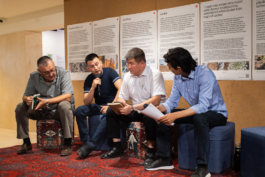
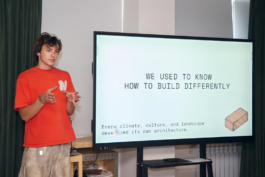
Image 1: Panel “From Waste to Construction Materials” with invited guests from the Waste Management Agency, Brick Factory Entrepreneur and Head of Material Lab of Karakalpakstan State University. Format by Evey Kwong and moderation by Akhmed Kaipbergenov.
Image 2: Speculative workshop: How do we reimagine future cities? Format and moderation by Maxim Velli and Kamila Sobirova.
Shopker Jay responds not only through design, but through activation. The project reanimates the shopker earthen building tradition through the intersection of material science, ecology, and living craft practice. It also serves as a platform for connecting disciplines, institutions, and situated knowledge, bringing together craftspeople, students, material scientists, and researchers from Karakalpak State University throughout the process—from material research and prototyping to collective construction.
Alongside the pavilion, workshops and a public panel created space to reflect on how we might build differently in the face of industrialisation, globalisation, and ecological change. Grounded in vernacular architectures from different contexts, the discussion explored how building traditions evolved in response to climate, available materials, and place, and what is lost when these relationships are displaced. Bringing together practitioners, researchers, and policymakers, it positioned regenerative construction not as a return to the past, but as a foundation for more resilient, locally rooted building cultures.
Image credit:
01 – Construction of an adobe house. First tier. Uzbekistan, 1914. 28670170, Zakhar Vinogradov, State Historical Museum
02 – Жданко Т.А. Каракалпаки Хорезмского оазиса (Материалы полевых исследований Каракалпакского этнографического отряда Хорезмской экспедиции АН СССР 1945-1948 гг.) // Труды Хорезмской археолого-этнографической экспедиции. Т. I. М., 1952bio
A project collaboration with the Material Lab of Karakalpak State University, Panaev Brick Factory and the Nukus Waste Management Agency. Supported by Uzbekistan Art and Culture Development Foundation (ACDF).
Project lead and designer: Evey Kwong
Architect: Akhmed Kaipbergenov
Brick experimentation concept: Maxim Velli & Evey Kwong
Master craftsman: Kydyrniyazov Kairatdin Eshniyazovich
Climate policy & sustainable development: Kamila Sobirova
Mentors: Jan Boelen & Eva Pfannes
Acknowledgement for brick experimentation:
Zhuginisova Nauryzgul, Zharlkaganov Sultan, Ayapbergenov Nursultan, Khalmuratova Oygul, Kalbaev Bakhauatdin, Nauryzbaev Azamat